

Amberous Perfume: How to Choose an Amber Fragrance
What does “amber” in a perfume mean: a colour, fossilised resin or a mood shaped by warmth, sweetness and texture? In perfumery, amberous usually describes that mood, but the word can leave you guessing. One scent may feel resinous and spicy; another, soft, sweet and almost creamy.
If you’ve struggled to imagine how an amber fragrance will feel on your skin from a list of notes, you’re not alone. The amber family spans a wide range of styles, so choosing one isn’t simply a matter of liking the word “amber”. It helps to identify the qualities you enjoy and how you want the fragrance to develop as you wear it.
This guide explains what amberous means in perfumery, how to compare different scent styles and how to test a fragrance on your skin. We’ll explore resinous, spicy, floral and gourmand ambers, then look at practical ways to assess a scent beyond its opening impression. Use the collection as a starting point for finding the kind of warmth that appeals to you.
Key Takeaways
- In perfumery, amberous describes a warm, amber-like impression, not a promise that a perfume contains fossilised amber.
- Amber accords are created by blending materials to suggest warmth, sweetness and resinous depth.
- Compare warm-resinous, sweet-creamy, spicy and floral styles to find the scent character you enjoy.
- Use fragrance descriptions to explore different amber moods, rather than treating collection highlights as a ranking.
- Start with notes and textures you already like, then browse amberous fragrances with a clearer idea of what may suit you.
What does amberous mean when you are choosing a perfume?
Amberous means having the character, warmth or colour associated with amber. In a perfume description, it usually points to a sensory impression rather than a specific ingredient. The word may suggest warmth, a soft glow or resinous depth, but the fragrance’s other notes help explain how that impression takes shape.
Amber can refer to fossilised resin, a golden-yellow to brown colour, or a perfumery idea. These meanings are linked by association, not by scent. Fossilised amber is a material; its warm, honeyed colour is a visual reference; and a perfumer may use the same word to evoke an atmosphere. A fragrance description doesn’t promise that fossilised amber is inside the bottle.
Amber is a material and a colour; amberous is an adjective that, in perfume, signals a scent impression rather than a literal ingredient. When you see the term, look at the accompanying notes to understand what kind of warmth the description suggests. This is more useful than trying to work out whether the fragrance contains amber itself.
Amberous as a word: meaning, rarity and pronunciation
The Oxford English Dictionary records amberous as an adjective meaning amber-like or having qualities associated with amber. It’s an uncommon word, but that doesn’t make a fragrance more exclusive; it simply appears less often in everyday language. As a pronunciation guide, say it AM-buh-ruhss. Knowing the word’s meaning can make an unfamiliar description easier to read, without turning it into a technical promise.
What amberous suggests in a fragrance description
Read amberous as a guide to an impression, not a fixed recipe. It may suggest warmth, resinous depth or sweetness, but none of those qualities alone tells you exactly how a perfume will smell. Fragrance is built from materials and accords, and its notes combine to create an evolving impression. The Perfume overview offers a general introduction to fragrant materials and perfume notes.
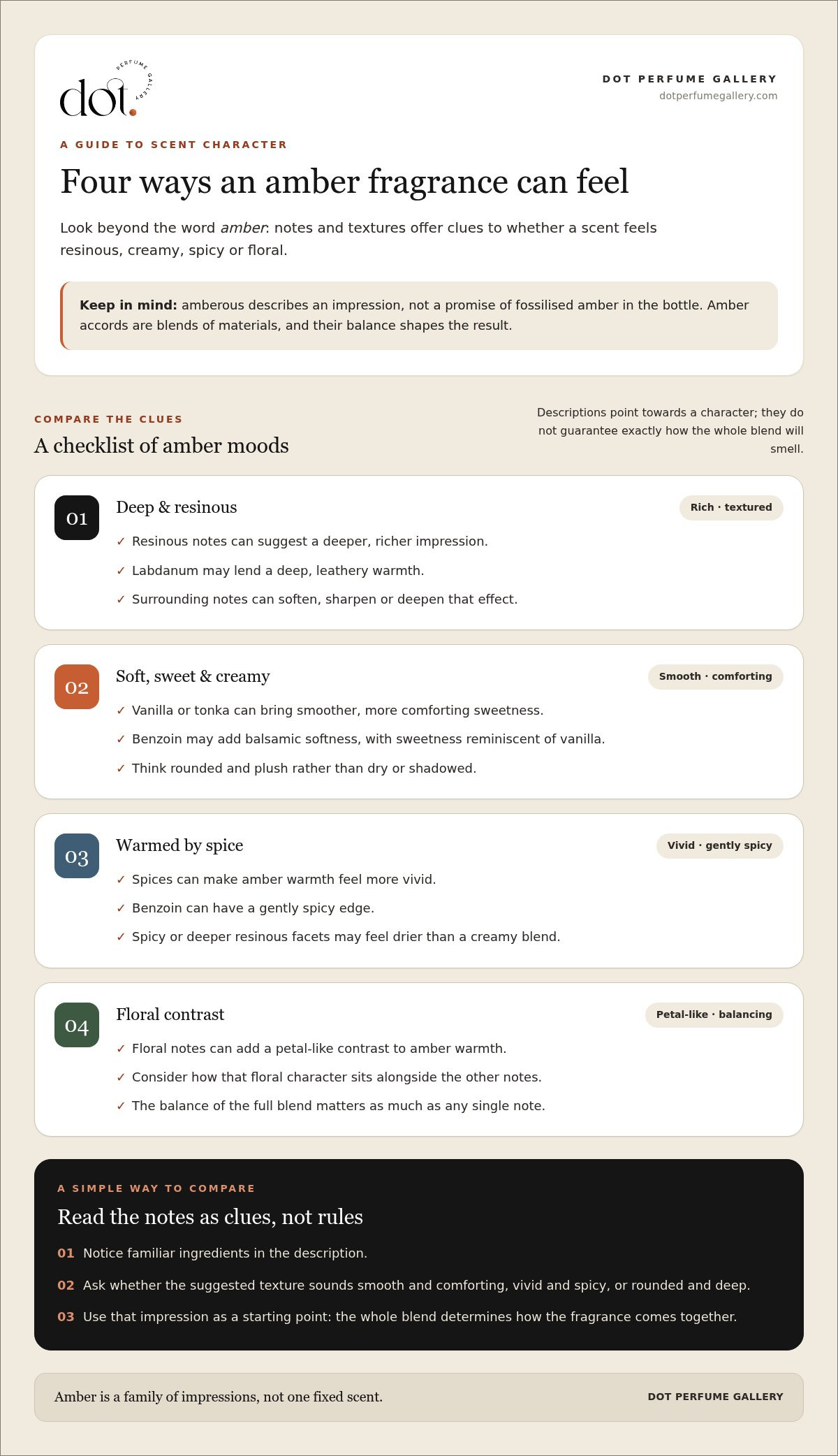
Look at the words around amberous. Vanilla or other sweet notes may suggest a softer, creamier effect; spices can make the warmth feel more vivid; and resinous notes may point to a deeper, richer impression. Florals can add a petal-like contrast. These are helpful directions, not guarantees: the balance of the whole blend matters as much as any individual note.
For a practical first read, note the most familiar ingredients in the description, then consider their likely texture and mood. Does the combination sound smooth and comforting, vivid and spicy, or rounded and deep? This turns a broad adjective into a personal starting point and makes it easier to compare fragrances by character, not just by label.
How amber accords create warmth, sweetness and resinous depth
The inviting warmth associated with amber in perfumery doesn’t come from grinding up pieces of fossilised resin. Fossilised amber is practically odourless, so it isn’t the perfume accord itself. Instead, a perfumer blends fragrant materials to suggest a glowing, resinous warmth. Fossilised amber is a scentless material; an amber accord is a composed fragrance impression.
There’s no single, fixed recipe. An accord can combine natural resins with other natural or synthetic aroma materials, each contributing a different shade of warmth, sweetness or depth. Like a palette of colours, the ingredients can be balanced in many ways. One blend may feel soft and balsamic; another, drier, darker or more pronounced. The American Chemical Society’s The Chemistry of Perfume explores how fragrant compounds and their characteristics contribute to the perfumes we experience.
Keep that variation in mind as you browse amberous descriptions. The word amber may point to a family resemblance, but the accord’s ingredients and proportions shape its particular character. A perfume might have a hint of warmth in the background or a more enveloping, resin-rich presence.
Labdanum, benzoin and the character of an amber accord
Labdanum is a plant resin that can lend a deep, leathery warmth to a composition. Benzoin can bring balsamic softness, with sweetness reminiscent of vanilla and a gently spicy edge. Together, these materials can help create the rounded, glowing impression associated with a classic amber style. They aren’t a compulsory pair, though; an amber fragrance may use other materials to suggest similar warmth or depth.
When you see these names in a note list, treat them as clues rather than a guarantee of the full experience. Labdanum may suggest a duskier, more textured feel, whilst benzoin may hint at a smoother, sweeter quality. The surrounding notes and their balance can soften, sharpen or deepen either impression.
Vanilla and tonka: where an amber scent becomes softer
Vanilla or tonka can give an amber composition a smoother, more comforting sweetness. Think of the difference between a soft, creamy texture and a dry, spicy or resinous one: each may feel warm, but the mood is distinct. A sweeter blend can seem plush and rounded, whilst spices or deeper resinous facets may bring a drier, more shadowed character.
These ingredients don’t define every amber perfume, and sweetness isn’t always the dominant note. Look at the full description rather than relying on one ingredient to predict the result. To compare different interpretations of amber, browse the amber fragrance collection and note which ingredients and textures appeal to you.
How to compare amber fragrances by the scent character you enjoy
Rather than choosing by the word “amber” alone, begin with the texture and mood you’d most like to wear. Are you drawn to something smooth and sweet, deep and resinous, or warmed by spice or flowers? Use the comparisons below to narrow your options, then look for those qualities in the fragrance description.
Choose a direction: resinous, gourmand, spicy or floral
For a deeper, balsamic impression, start with descriptions that mention resinous qualities. If you’re drawn to vanilla, caramel or creamy textures, a gourmand direction may feel more familiar. Spices can lend warmth a brighter edge, whilst florals can introduce contrast and lift. The final mood depends on how the notes are balanced.
Before comparing fragrances, jot down two or three notes you enjoy and a texture you’re seeking, such as soft, dry or richly rounded. This gives you a personal point of reference. It’s more useful than relying on broad labels or assumptions about who should wear a scent, when it should be worn or how strongly it will be perceived.
Read fragrance notes as clues, not a promise of the full experience
A listed note can point towards a fragrance’s direction, but it won’t capture every nuance or explain how the composition comes together. Notice which elements seem to lead and which provide contrast. A sweet note paired with woods may suggest a different balance from sweetness alongside florals or spice. Compare the overall pattern, not just one appealing word.
Descriptions can help you narrow your choices, but they can’t reproduce how a perfume develops on your skin. If you’re sampling, try the fragrance on a blotter first, then on your skin if you’d like to understand how it wears on you. Give it time to settle and revisit it later: the opening can differ from the fragrance’s later character. For wider context on the amber family, see Amber fragrances: A guide to the scent family. For a separate policy perspective, this submitted comment in an FDA docket discusses fragrance ingredients and disclosure; it is not a guide to how a particular perfume smells or a definitive statement of regulation. Fragrance Chemical Regulations.
Amberous collection highlights: four different ways to wear amber
Amber can feel creamy, resinous, spiced or floral, depending on the notes that shape its character. These four fragrances offer distinct examples from the amberous collection, not a ranking or an exhaustive guide. Use their descriptions to identify ingredients and textures that appeal to you; each takes its own path through the amber theme.
Amber can move from almond-milk softness to warm resins, saffron and rose, with its supporting notes changing the mood. That contrast is useful when you’re narrowing down a preference. Rather than looking for one definitive amber style, consider which of these different directions sounds most inviting.
For creamy sweetness: Ambre Latte
Ambre Latte is described through amber woods wrapped in almond milk, with caramel, tonka and vanilla also named in its notes. Together, those details point towards a smooth, gourmand direction: the woods suggest amber warmth, whilst almond milk and the sweet notes bring a softer, creamier impression. If you’re drawn to a rounded profile with familiar dessert-like touches, this is a useful example to explore. Notice how the description balances woods with sweetness instead of presenting amber as resinous alone.
For spice, woods and resin: Amber Narcotique, Bijou Zafran and Istanbul
Amber Narcotique is described through warm resins, spices and precious woods. These elements put the emphasis on warmth and depth, with spices adding another facet to the resinous, woody character. If you tend to prefer less creamy descriptions, this combination offers a useful point of comparison.
Bijou Zafran brings together saffron, pear, iris and benzoin. The listed notes set up a contrast between spice, fruit, floral character and benzoin’s balsamic facet. Use that range of notes to consider what you enjoy most: a bright fruit impression, a floral touch, or the warmth suggested by saffron and benzoin.
Istanbul is described with cardamom, rose and creamy woods on a warm base. Cardamom and rose offer a spicy-floral pairing, whilst creamy woods and the warm base bring a softer foundation. It’s another way to think about amber: not only as sweetness or resin, but as warmth alongside contrasting notes.
When you compare these examples, choose the description whose notes sound most appealing together, rather than letting a single ingredient decide for you. Ambre Latte leans towards a smooth gourmand impression; the others bring different combinations of resins, spices, woods, fruit and florals. Together, they show how varied amber can feel.
Explore the amberous collection to compare these different scent directions and discover which notes draw you in.
Find your amberous fragrance and choose your next step
Choosing an amber fragrance needn’t begin with a trend or a long list of unfamiliar notes. Start with what already feels right to you: the fragrances you reach for, the textures you enjoy and the mood you’d like to find again. Use those preferences to narrow the amber styles worth exploring. The best fit is personal, shaped by the character you enjoy rather than by a single definition of amber.
A simple checklist before choosing an amber fragrance
Use these steps to make comparing descriptions more focused:
- Name your familiar favourites. Recall the notes and textures you enjoy in fragrances you already wear. Do you gravitate towards sweetness, floral softness or a dry, woody quality?
- Choose a scent direction. Decide whether you’re curious about resinous warmth, creamy sweetness, spice or floral contrast. You can have more than one preference, but picking a first direction makes it easier to focus.
- Compare the descriptions. Look at how the notes sit together instead of choosing by one appealing ingredient. A description may point towards a style you like, but it can’t capture every nuance of wearing the fragrance.
- Browse with your preference in mind. Revisit the options that match your chosen direction. Use their notes and overall character to decide which you’d most like to explore further.
This sequence turns “amber” from a broad category into a more personal set of clues. If you like softness, creamy or gourmand notes may catch your attention; if you prefer greater depth, resinous or woody facets may feel more compelling. You don’t need a perfect formula. A clear sense of what appeals to you is enough to make browsing more considered.
Browse the collection at your own pace
Spend time with the descriptions closest to your chosen direction. Notice which words catch your attention and whether the combination sounds smooth, spiced, floral or rich. Comparing two or three possibilities side by side can make differences clearer: look at their notes and overall character rather than trying to guess which is universally “best”. Your preferences are the more useful guide.
For another considered amber fragrance exploration, Ambre Noir Perfume: A Considered Guide to Its Scent and Character offers a related path through the theme. As you read, keep your own note preferences in view. They can help you recognise what feels distinctive and appealing to you.
There’s no need to rush the choice. Let curiosity lead and explore the Amberous fragrance collection at your own pace.
Let your next fragrance feel like you
Choosing a perfume can be less about finding the “right” answer and more about recognising a feeling you want to return to. Perhaps you’re drawn to soft, close-wearing sweetness or a richer impression that feels warm and textured. Let that instinct guide you. The most meaningful amberous choice is the one whose character feels at home on your skin and in your everyday rituals.
Dot Perfume Gallery brings together curated niche and luxury fragrances, with descriptions that open onto contrasting amber, spicy, floral and gourmand moods. Take your time with them. Notice which combinations make you curious, which textures feel familiar and which scent direction you’d like to discover beyond the page. Private perfume consultations are available by appointment on Tuesday to Thursday evenings if you’d like a more personal way to explore fragrance.
Explore the Amberous fragrance collection and find a new scent direction to consider.
Frequently Asked Questions
Is amberous a real word?
Yes. The Oxford English Dictionary records amberous as an adjective, with evidence dating to the 1840s. It’s uncommon in modern written English, so you’re more likely to see it in descriptive or literary writing than everyday conversation. In a perfume description, treat it as a clue to the impression intended, then use the listed notes to see whether that impression is warm, sweet, woody or something else.
How do you pronounce amberous?
In British English, say amberous as AM-buh-ruhss, or /ˈamb(ə)rəs/ in phonetic notation. It has three syllables and begins with the same sound as amber. In a fragrance description, read it as an adjective describing a quality or impression, not the name of a specific ingredient. Its connection to amber offers a useful first clue.
Is amber perfume made from fossilised amber?
Usually, no. Fossilised tree amber is practically odourless, so it generally isn’t the fragrant material creating an amber impression in a perfume. That character is typically composed from other materials. For a shopper, this means the word “amber” on its own doesn’t identify a particular ingredient; check the product description for the notes that shape the fragrance’s character.
Does amber fragrance always smell sweet?
No. Some amber fragrances lean towards smooth sweetness, whilst others may feel drier, more woody, resinous, spicy or floral. To work out which direction you’d prefer, compare the supporting notes in a few descriptions. Vanilla may appeal if you enjoy sweet scents, whilst woods or spices can suggest a different balance. The full combination matters more than any one note.
Can you wear an amber fragrance in warm weather?
Yes, if you enjoy how it smells; there’s no universal seasonal rule. Amber fragrances vary, so a composition with a lighter-feeling balance may appeal differently from one described as richly resinous. If you’re choosing a scent for a warm day, focus on its notes and the mood you want rather than assuming every amber perfume will feel heavy. Your own preference is the best guide.
Is amber fragrance suitable for any gender?
Yes. Amber fragrances aren’t limited to one gender; personal taste is a more helpful guide than a label. Consider the qualities you enjoy in other scents. If you often reach for florals, look for amber descriptions that mention floral notes; if you prefer woods or spice, those combinations may catch your attention. Choose the character you feel comfortable wearing, whatever category a retailer uses to organise it.
How long does an amber perfume last on the skin?
Wear time varies, so the word amberous can’t tell you how long a particular perfume will remain noticeable. Skin, application and environment can all affect how you experience a scent. When testing a fragrance, notice its opening and return to it after it has had time to settle. That gives you a more personal impression than relying on the fragrance family alone.
How can I choose an amber fragrance if I am new to the scent family?
Begin with notes you already recognise and enjoy, such as rose, vanilla, woods or spice. Pick one or two as a starting point, then compare descriptions to see how each perfume balances its notes. Make a short list of the combinations that sound appealing and set aside those that don’t suit your taste. This gives you a considered shortlist without needing to know every perfumery term.